Why does my cat headbutt me?
Cat behavior · Head Bunt
Your cat rubs the side of its head firmly against your leg. What's happening?
Pawclue turns this into a 10-second daily guess — play today's.
Marking you with their scent — claiming you as safe
What it actually means
Cats have scent glands on their cheeks, chin, and forehead. "Bunting" deposits their scent on you, mixing your smell with theirs. It's not ownership — it's group-identity creation.
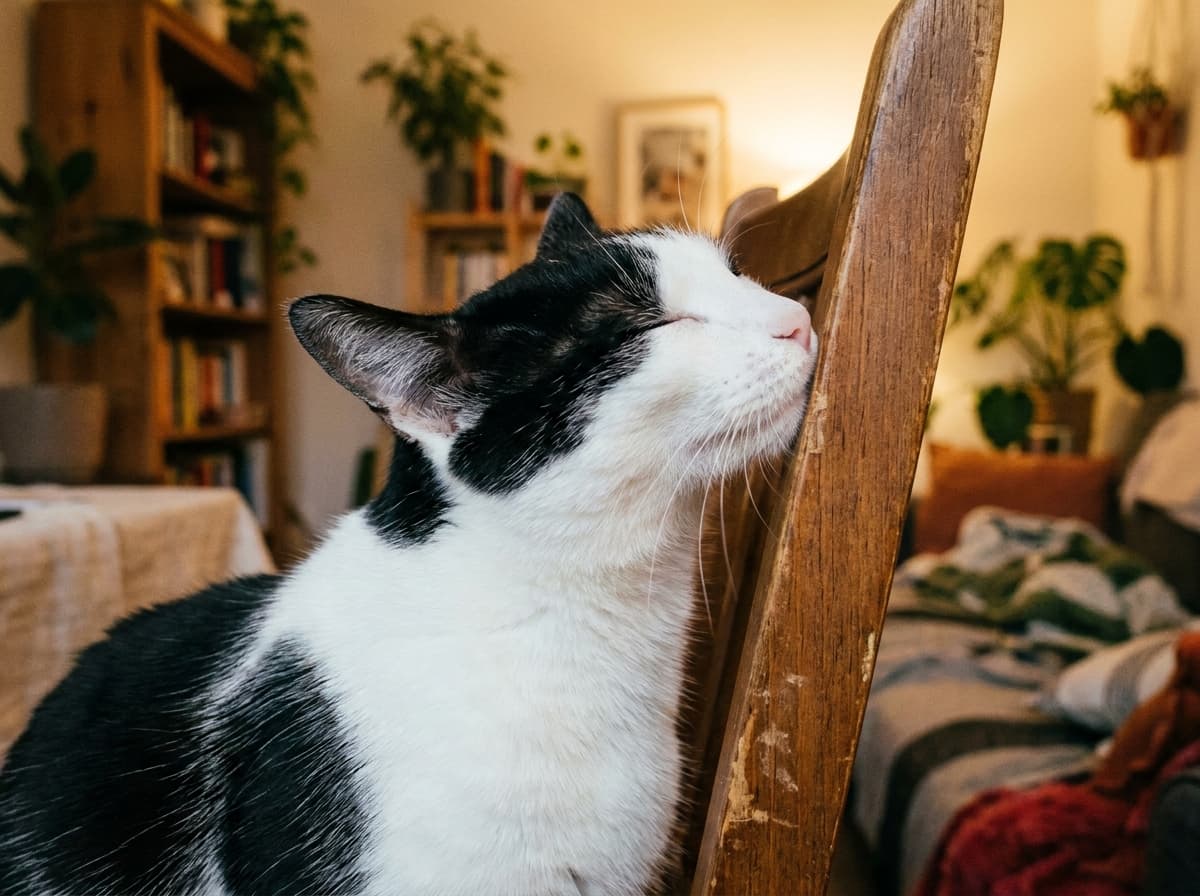
Cat headbutting, properly called "bunting," is when your cat presses or rubs the side of its head, cheeks, or forehead firmly against you. It can feel like a demand for attention, and sometimes it doubles as one, but the core of the behavior is about scent rather than affection alone.
Cats have scent glands clustered around the cheeks, chin, lips, and forehead. When your cat bunts you, it's depositing its own scent onto you and picking some of yours up in return, blending the two into a shared group smell. Behaviorists frame this as creating a colony identity rather than claiming ownership. In the wild, cats that live together rub on each other to build a familiar communal scent, and your cat is folding you into that same circle.
The common misread is treating a bunt as pushiness or "head-pressing." Normal bunting is rhythmic, relaxed, and aimed at you, furniture, or doorframes, and your cat looks content doing it. That's very different from head-pressing against a wall or floor, where a cat stands and pushes its head into a hard surface for long stretches, often disoriented. Genuine compulsive head-pressing is a neurological red flag and warrants a prompt vet visit, but it looks and feels nothing like a happy cheek-rub against your shin.
For ordinary bunting, the best response is to let it happen. If your cat bunts your hand, a gentle return rub along the cheeks and under the chin usually goes over well, since those are the same spots the cat is trying to mark. Pushing your cat away mid-bunt interrupts a small bonding ritual, so it's worth indulging.
What to do
If your cat bunts you, it's saying you're part of its colony. Don't push it away during a bunt; that breaks the trust ritual.
Test your knowledge
Your cat rubs the side of its head firmly against your leg. What's happening?
- Scratching an itch
- Marking you with their scent — claiming you as safe✓ correct
- Showing dominance over you
- Begging for food
Pawclue turns one pet behavior into a 10-second daily guess — free, no signup.
Play today's puzzle →