🐱 Cat behavior · common

Why does my cat purr?

Cat behavior · Purring

Cats purr in many situations. Which is NOT a documented reason for purring?
Pawclue turns this into a 10-second daily guess — play today's.
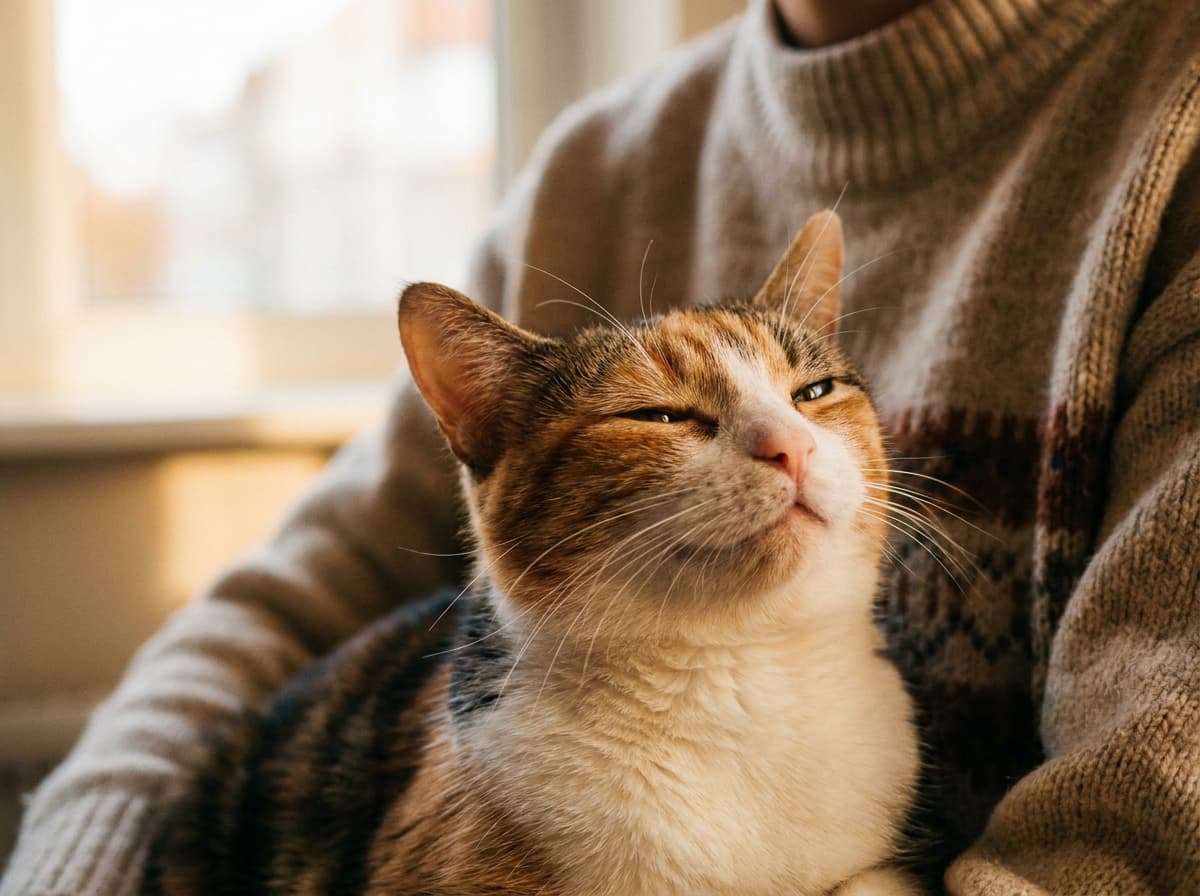
Purring — Cat purring while being held
Cat purring while being held
Short answer

Asserting dominance over other cats

Collectible · common
PAWCLUE · COMMON Purr Reader CAT · №06
2–4 tries
Regular stamp
PAWCLUE · COMMON Purr Reader CAT · №06 PERFECT
1st try · Perfect
Gold frame

What it actually means

Purring is a self-regulating behavior, not a dominance signal. Cats purr when content, when sick or injured (the 25-50Hz frequency may aid bone healing), and when soliciting food (the "solicitation purr" includes a higher-frequency cry humans find harder to ignore).

Purring is the low, steady rumble cats make by rapidly twitching the muscles of the voice box as they breathe in and out. It's one of the most recognizable cat sounds, and it's also one of the most misunderstood, because the easy assumption, that a purring cat is always a happy cat, isn't the whole story.

Most of the time, purring really does signal contentment. A cat curled on a warm lap, getting chin scratches, eyes half-closed, is purring because it feels safe and comfortable. But cats also purr when they're sick, injured, frightened, or even close to death. The leading idea is that purring is a self-regulating, self-soothing behavior, and its frequency range may even play a role in calming the cat and supporting tissue and bone healing. So a purr can mean "I'm content" or it can mean "I'm trying to comfort myself through something hard."

There's also a specific "solicitation purr" cats use when they want food. Researchers found this version has a higher-pitched cry folded into it, sitting in a frequency range humans are biologically tuned to respond to, much like an infant's cry. That's why a hungry cat's purr can feel weirdly hard to ignore at 6am.

The practical takeaway is to read the purr alongside everything else. Soft body, relaxed ears, and a cat seeking you out means a happy purr. A purring cat that's hunched, hiding, off its food, or breathing oddly is a different story, and that combination is worth a vet visit rather than reassurance, since cats are experts at masking pain behind a purr.

What to do

A purring cat is not always a happy cat. Pair purring with body posture and ear position to read the actual state.

📚 Source: McComb et al., 2009, Current Biology — identified the solicitation purr's embedded cry frequency that exploits human infant-cry sensitivity.

Test your knowledge

Cats purr in many situations. Which is NOT a documented reason for purring?

  1. Contentment around safe humans
  2. Self-soothing when in pain
  3. Asserting dominance over other cats✓ correct
  4. Asking for food (solicitation purr)

Pawclue turns one pet behavior into a 10-second daily guess — free, no signup.

Play today's puzzle →

More cat behaviors