๐Ÿถ Dog behavior ยท common

Why does my dog stop to sniff everything on walks?

Dog behavior ยท Sniffing the Ground

On a walk, your dog suddenly stops to sniff a specific spot intensely. The MOST likely interpretation:
Pawclue turns this into a 10-second daily guess โ€” play today's.
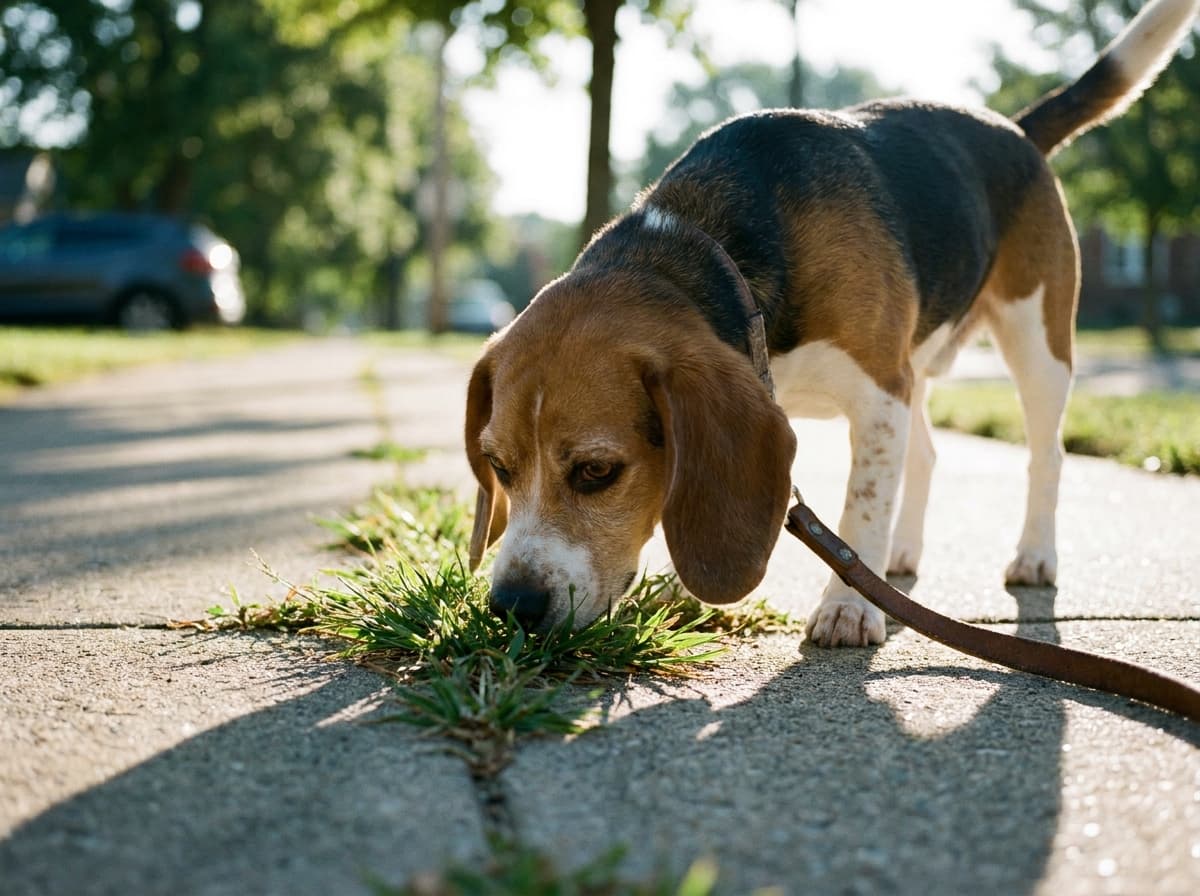
Sniffing the Ground โ€” Dog sniffing the ground intently on a walk
Dog sniffing the ground intently on a walk
Short answer

Reading chemical messages โ€” the dog's primary sense

Collectible ยท common
PAWCLUE ยท COMMON Nose Worker DOG ยท โ„–16
2โ€“4 tries
Regular stamp
PAWCLUE ยท COMMON Nose Worker DOG ยท โ„–16 PERFECT
1st try ยท Perfect
Gold frame

What it actually means

Dogs have 220 million olfactory receptors to a human's 5 million. A single sniff at a fire hydrant tells them what dogs passed by, when, what sex, age, and stress level. Sniff stops are reading, not stalling.

On a walk, your dog plants its nose at a specific spot, a lamppost, a tuft of grass, a fire hydrant, and just will not move. It can feel like stalling or stubbornness, especially when you're trying to keep a pace. From your dog's point of view, though, that sniff stop is the most interesting part of the entire outing.

Dogs experience the world primarily through smell. They have on the order of a couple hundred million scent receptors to a human's roughly five million, plus far more brainpower devoted to processing odor. A single deep sniff at a well-used spot can tell your dog which other dogs passed by, how long ago, their sex, rough age, and even something about their stress or reproductive state. The sniffing isn't a distraction from the walk, it is the walk, your dog is reading the neighborhood's news feed.

The common misread is treating sniff stops as disobedience to be corrected. Dragging your dog along teaches it that the richest part of its day is something to be rushed through, and for dogs that don't get much mental stimulation, that can quietly add to frustration and pent-up energy. Most of the time, the sniffing is a sign of a curious, mentally engaged dog, not a defiant one.

The better approach is to build dedicated sniff time into walks, sometimes called a "sniffari," where the route and pace are dictated by your dog's nose rather than your step count. Slow, sniffy walks are genuinely tiring in a good way and provide cognitive enrichment that brisk marching can't. If sniffing suddenly tips into obsessive eating of things off the ground, that's worth watching, but ordinary investigative sniffing is healthy and worth indulging.

What to do

Build dedicated sniff time into walks. "Sniffaris" reduce stress and provide cognitive enrichment that fast-walks cannot.

๐Ÿ“š Source: Horowitz, Being a Dog (2016) โ€” popular synthesis of canine olfactory research.

Test your knowledge

On a walk, your dog suddenly stops to sniff a specific spot intensely. The MOST likely interpretation:

  1. Distraction โ€” disobedience
  2. Reading chemical messages โ€” the dog's primary senseโœ“ correct
  3. About to mark territory
  4. Sensing danger

Pawclue turns one pet behavior into a 10-second daily guess โ€” free, no signup.

Play today's puzzle โ†’

More dog behaviors