The Aloof Cat Myth
Common belief: cats are independent and don't form strong attachments to humans. What does the research actually show?
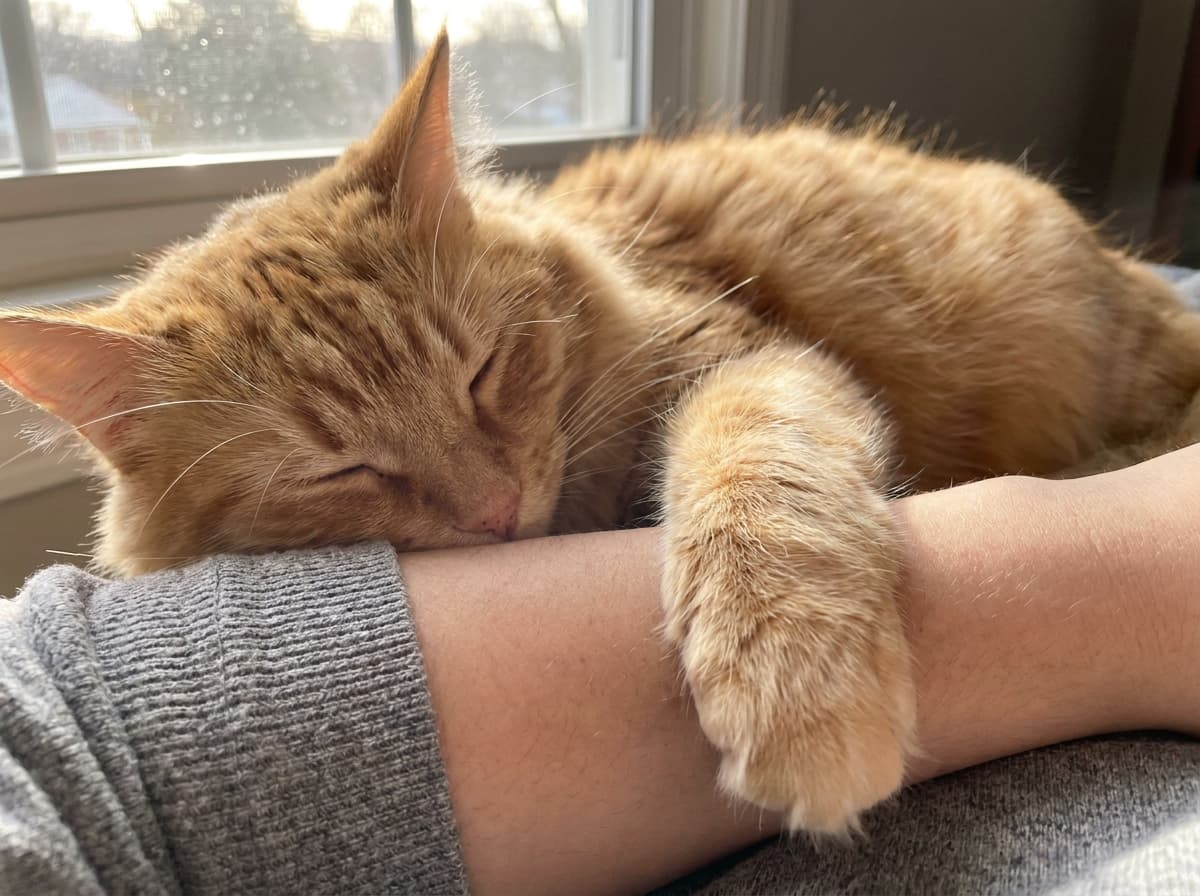
Cats form secure attachments to humans at similar rates as dogs and infants
What it actually means
Using the same "Secure Base Test" protocol used on infants and dogs, cats showed secure attachment to their caregivers at a rate of 64.3% — statistically indistinguishable from infants (65%) and dogs (~58%). The "aloof cat" stereotype is a misread of species-typical communication, not a lack of bond.
What to do
Your cat's quieter affection signals (sleeping in the same room, slow blink, tail-up greeting) are real attachment markers. Don't measure cat bonding by dog standards.
Test your knowledge
Common belief: cats are independent and don't form strong attachments to humans. What does the research actually show?
- Confirmed — cats prefer solitude
- Cats form secure attachments to humans at similar rates as dogs and infants✓ correct
- Only kittens form attachments; adult cats don't
- Only female cats form attachments