Why does my cat arch its back and puff up?
Cat behavior · The Halloween Pose
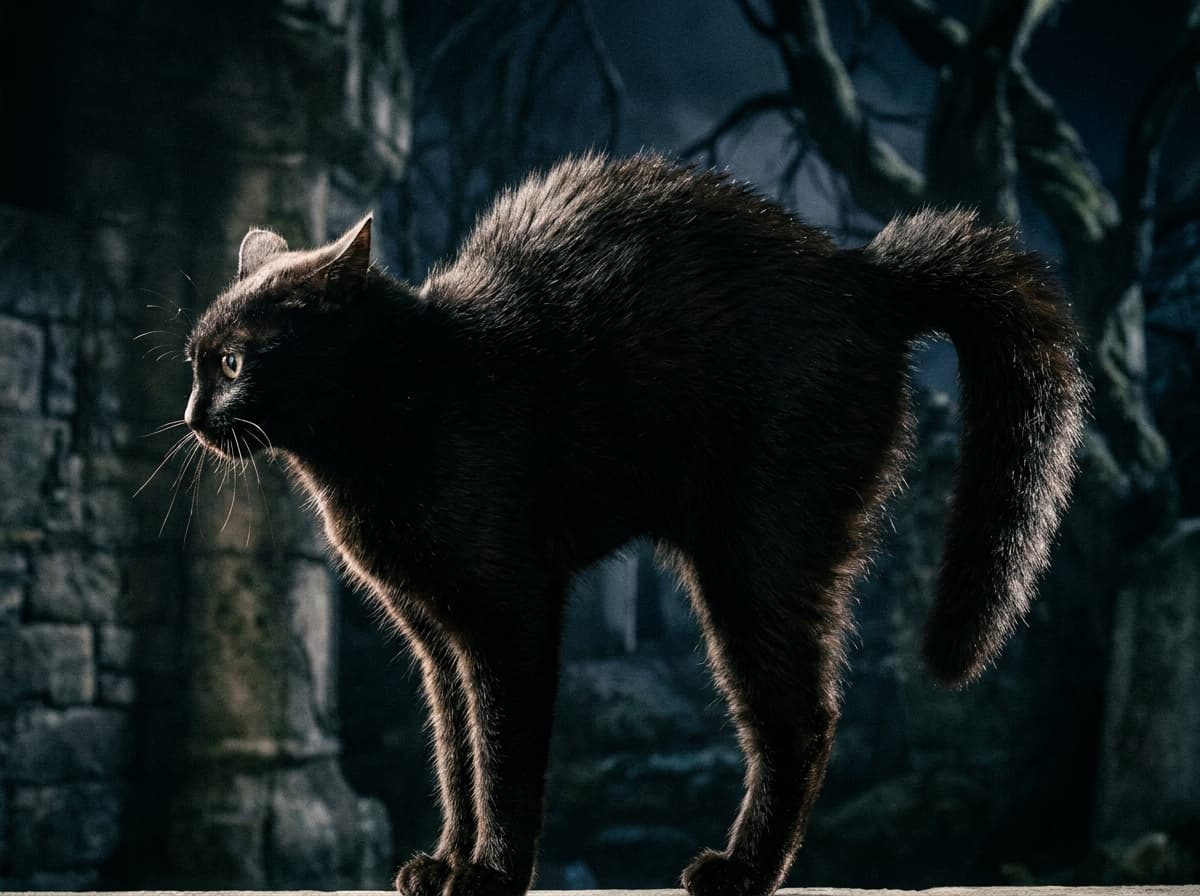
A cat arches its back, raises its fur, and turns sideways. What's it doing?
Pawclue turns this into a 10-second daily guess — play today's.
Threat display — trying to look larger to a perceived danger
What it actually means
The "Halloween cat" pose is a defensive threat display. Arching, piloerection (fur up), and presenting sideways all make the cat look bigger to an opponent. Often paired with hissing.
The arched back, raised fur, and sideways stance is so iconic it has a nickname, the "Halloween cat" pose, the silhouette you see on every October decoration. It's dramatic and unmistakable, and recognizing it matters, because a cat in this posture is telling you something important about how it feels.
This is a defensive threat display. By arching the spine, fluffing the fur (a reflex called piloerection), and turning sideways, a cat makes itself look as large and imposing as possible to whatever it perceives as a danger, another cat, a strange dog, a sudden noise, sometimes even a person. It's frequently paired with hissing, spitting, a hard stare, and flattened ears. The whole package is built to say "I'm big, back off," in the hope of avoiding an actual fight.
The key thing to understand is that this is fear-driven, not confident aggression. A cat in the Halloween pose is frightened and on the edge of defending itself. The common mistake is reading it as playful, "look how puffy and cute," or trying to soothe the cat by picking it up. A cat in this state is primed to lash out, and reaching for it is a good way to get badly scratched or bitten.
The right response is to give the cat room and lower the temperature. Remove or block whatever is scaring it, the other animal, the noise source, and let the cat de-escalate on its own without crowding, cornering, or handling it. Most cats settle once the perceived threat is gone. If a cat is repeatedly going into full threat displays at everyday things, or redirecting that fear into aggression toward people or other pets in the home, that's a pattern worth working through with a vet or a qualified feline behaviorist.
What to do
Don't approach or pick up a cat in this posture — it's primed to swat or bite. Remove the perceived threat (another animal, loud noise) and let the cat de-escalate on its own.
Test your knowledge
A cat arches its back, raises its fur, and turns sideways. What's it doing?
- Stretching after sleep
- Threat display — trying to look larger to a perceived danger✓ correct
- Invitation to play
- Marking territory with body scent
Pawclue turns one pet behavior into a 10-second daily guess — free, no signup.
Play today's puzzle →