Why does my dog lick his lips when there's no food?
Dog behavior · Lip Lick (No Food)
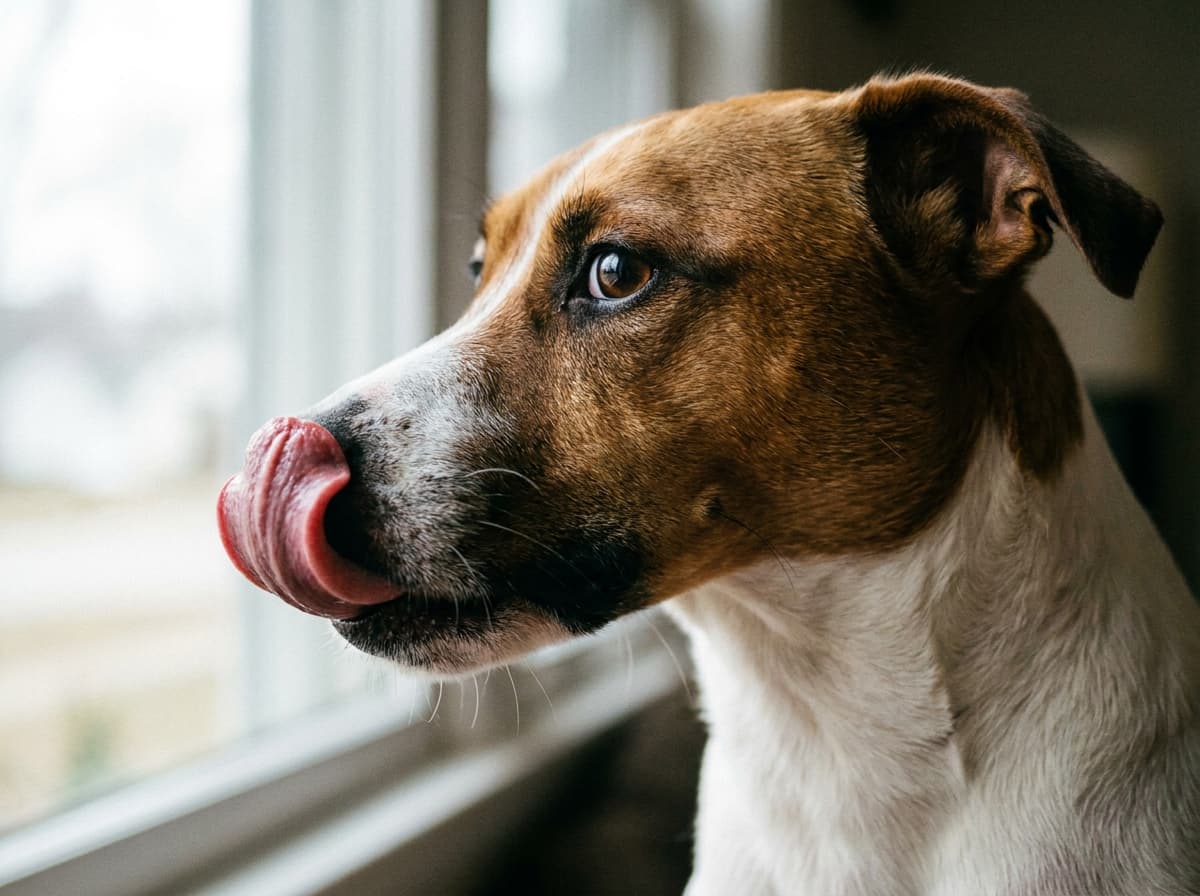
Your dog licks its lips when no food is present. The most likely interpretation:
Pawclue turns this into a 10-second daily guess — play today's.
Stress or appeasement signal
What it actually means
Non-food lip-licking is one of the most reliable dog stress signals. Especially common during scolding, vet visits, or when being approached by a stranger. The dog is signaling "I mean no harm."
A quick flick of the tongue over the lips or nose when there's no food anywhere is easy to overlook, but it's one of the most reliable little stress signals dogs give. People tend to notice it only in hindsight, after a dog has growled or snapped, when the lip-licks were actually there the whole time as an early warning.
When food isn't involved, lip-licking usually functions as a stress or appeasement signal. It shows up most during scolding, vet visits, nail trims, when a stranger or a child leans in too close, or in any moment a dog finds slightly threatening. The dog is essentially signaling "I mean no harm, please ease up," trying to defuse a situation it isn't comfortable with. It rarely travels alone, you'll often see it alongside yawning, turning the head away, a lowered body, or whale eye, and that cluster is the dog asking for space.
The common misreads are assuming the dog is thirsty, hungry, or about to be sick. Those can cause licking too, but a single context-linked lick at a tense moment, especially paired with the other calming signals, is far more often about stress than about the dog's stomach. Treating it as nothing is the real risk, because it's frequently the step before a dog escalates to a louder warning.
This signal matters most around kids. Dog-bite prevention research keeps finding that missed lip-licks, yawns, and head-turns precede a lot of bites to children, who naturally crowd and hug dogs. If a child is interacting with a dog and the dog repeatedly lip-licks, that's the moment to calmly create space, not to push for more closeness. Respecting the signal keeps everyone safer and teaches your dog that asking for room actually works.
What to do
If a child is interacting with a dog and the dog repeatedly lip-licks, separate them. Dog-bite prevention research consistently shows missed lip-licks as a precursor.
Test your knowledge
Your dog licks its lips when no food is present. The most likely interpretation:
- Thirsty
- Stress or appeasement signal✓ correct
- About to vomit
- Smelling something interesting
Pawclue turns one pet behavior into a 10-second daily guess — free, no signup.
Play today's puzzle →